
Back to Latest Briefings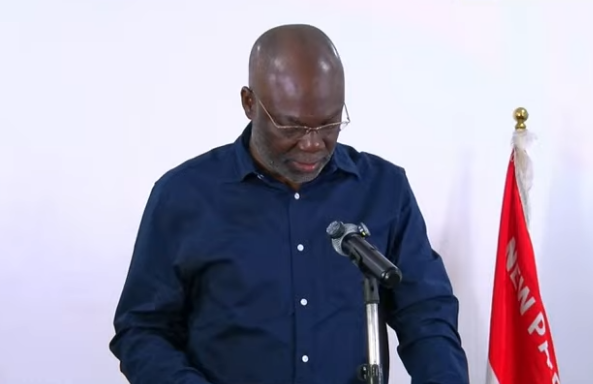


August 5, 2026
AI-Enhanced
‘Compassion without fiscal discipline is not sustainable’ – Minority questions funding for GH¢2 diesel relief
Money
Policy
Key Points
- The Minority in Parliament has questioned the government's decision to reduce the price of diesel by GH¢2 per litre.
- They are demanding clarity on how the intervention will be financed and its potential impact on state revenue.
- Ranking Member George Kwame Aboagye emphasized the need for sound fiscal planning, stating that "compassion without fiscal discipline is not a sustainable policy."
- The Minority seeks details on which specific fuel margins, levies, or taxes will be reduced, the estimated revenue implications, and how the intervention fits into the 2026 Budget.
- They also urged the government to ensure the reduction translates into lower transport fares and essential goods prices, and to establish a transparent framework for the initiative.
Why This Matters
This issue is critical for Ghana as fuel price interventions directly impact inflation, transport costs, and the general cost of living for citizens. The Minority's concerns highlight the delicate balance between providing immediate relief and maintaining long-term fiscal discipline, which is essential for Ghana's economic stability and ability to fund public services. Unclear financing for such policies could exacerbate existing financial challenges or lead to unsustainable borrowing.
Read Full Article
View original sourceRelated Articles
November 3, 2026
GCCE and WDI hold stakeholder consultations on financing Ghana’s electric two-wheeler industry
- The Ghana Chamber of Clean Energy (GCCE) and William Davidson Institute (WDI) held a workshop in Accra to address financing constraints for Ghana's electric two-wheeler sector.
- The event convened enterprises, financial institutions, and stakeholders to validate financing gaps and explore policy solutions.
- Identified financing challenges include limited import duty waiver implementation, difficulties transitioning from grants, reliance on company balance sheets, limited access to affordable local-currency debt, stringent lending requirements, equity investor preferences, and information gaps.
- GCCE emphasized the need for appropriate financing structures, stronger institutional collaboration, and an enabling environment to accelerate electric two-wheeler adoption.
- Workshop findings and recommendations will inform a forthcoming public report to guide GCCE's advocacy for policy and financing measures to support the sector's growth.
November 3, 2026
Ghana must reduce the cost of politics to curb influence of wealthy financiers – Development Economist
- Dr. Valentin Kwasi Mensah calls for reforms to curb the rising cost of political competition in Ghana.
- He warns that excessive campaign spending fosters politicians' dependence on wealthy financiers, who expect rewards like appointments or contracts.
- Research indicates a 59% increase in parliamentary campaign costs between 2012 and 2016, a trend exacerbated by poor enforcement of existing disclosure laws.
- Dr. Mensah recounts the Electoral Commission's failure to provide requested financial statements from major political parties despite constitutional and legislative mandates.
- He proposes establishing an independent regulator, campaign expenditure limits, timely donation disclosure, stronger enforcement, and improved internal party democracy.
November 3, 2026
8% pay rise: Workers will be better off in real terms— Dr Acheampong
- Public sector workers in Ghana are projected to experience real income improvements due to easing inflation preserving their purchasing power.
- Dr. Theo Acheampong of the Ministry of Finance stresses that the true measure of a salary adjustment is its real value after accounting for inflation, not just the nominal percentage.
- Historical data shows that in several past years, inflation significantly outpaced wage adjustments, leading to a decline in workers' real incomes.
- The trend is expected to reverse from 2025 onwards, with projected moderate inflation rates allowing for real wage gains despite seemingly lower nominal increases.
- The government's strategy focuses on sustainable wage adjustments coupled with inflation control to ensure workers' ability to meet their needs effectively.