
Back to Latest Briefings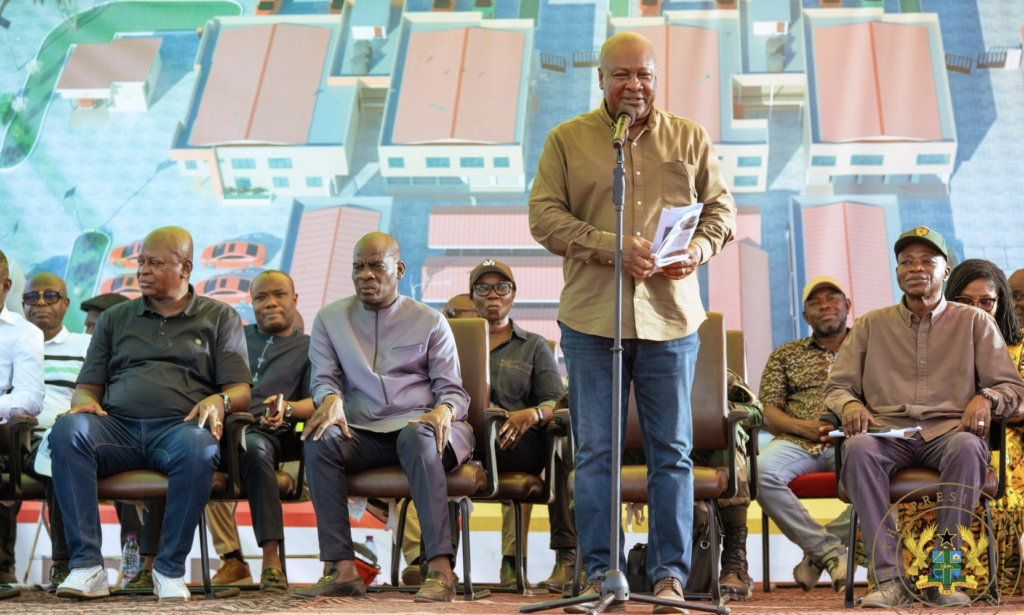


April 19, 2026
AI-Enhanced
Mahama pledges locally funded water project for Tamale after external loan setback
Money
Policy
Opportunity
Growth
Key Points
- President Mahama announced the government will self-finance a major water supply project for Tamale.
- An earlier €277 million external funding facility for water systems in Tamale and Damongo fell through.
- The failure was due to Ghana's debt default, which affected its ability to access new financing.
- The government has directed the Minister of Finance to mobilize the required €277 million in cedis locally.
- The project aims to substantially increase Tamale's daily water output and address persistent shortages, with interim measures already in place.
Why This Matters
This article highlights the direct impact of Ghana's national debt situation on crucial infrastructure development, forcing a pivot from external to self-financing for a major water project. It underscores the government's commitment to addressing vital public utility needs in Tamale and signals a potential shift towards greater local resource mobilization for essential projects, which could have broader implications for economic autonomy and development strategy.
Read Full Article
View original sourceRelated Articles
August 24, 2026
GoldBod denies GH¢1bn BoG overdraft claim, demands retraction and apology from Boako
- The Ghana Gold Board (GoldBod) has vehemently denied claims by MP Dr. Gideon Boako that it owes the Bank of Ghana (BoG) a GH¢1 billion overdraft.
- Dr. Boako, a Deputy Ranking Member on Parliament’s Finance Committee, questioned GoldBod's reported GH¢907 million profit, stating an outstanding overdraft would reflect a loss.
- GoldBod labeled Dr. Boako’s claim as “totally false,” a “deliberate and malicious smear campaign,” and demanded a retraction and apology.
- This dispute is set against a broader political and economic debate concerning GoldBod’s financial performance and the accounting treatment of GH¢22 billion losses from the Domestic Gold Purchase Programme (DGPP).
- GoldBod asserts it has never taken any loan, overdraft, or debt instrument from the Bank of Ghana or any financial institution since its establishment.
August 24, 2026
GoldBod losses remain key on Minority agenda as Parliament reconvenes – Afenyo-Markin
- The NPP Minority Leader, Alexander Afenyo-Markin, reaffirmed the caucus's commitment to investigate a reported US$1.7 billion loss linked to the Bank of Ghana’s Domestic Gold Purchase Programme and the Ghana Gold Board (GoldBod).
- This commitment was reiterated after Afenyo-Markin met with NPP flagbearer Dr Mahamudu Bawumia in Accra.
- Dr Bawumia commended the Minority Caucus for its accountability efforts and encouraged their continued work.
- The reported loss, equivalent to about 1.5% of Ghana’s GDP, will be a key issue for the Minority as Parliament reconvenes.
- The Minority is resolute in pursuing the matter to get answers for the Ghanaian public regarding the circumstances of the loss.
August 23, 2026
Why celebrate $2.62bn FDI while losing $1.7bn under the Domestic Gold Programme? IERPP asks
- The Institute of Economic Research and Public Policy (IERPP) welcomes Ghana's US$2.62 billion Foreign Direct Investment (FDI) as a sign of investor confidence.
- However, IERPP tempers this optimism with concern over an estimated GH¢22 billion (US$1.7 billion) loss from the Domestic Gold Purchase Program (DGPP).
- The DGPP loss is significant, equating to about 65 cents for every US$1 of FDI attracted, highlighting a major resource management issue.
- IERPP emphasizes that while FDI is crucial, it cannot substitute for prudent management and protection of existing public resources.
- The Institute calls for greater transparency, a clear breakdown of DGPP losses, and intense scrutiny from accountability institutions, Parliament, and civil society.