
Back to Latest Briefings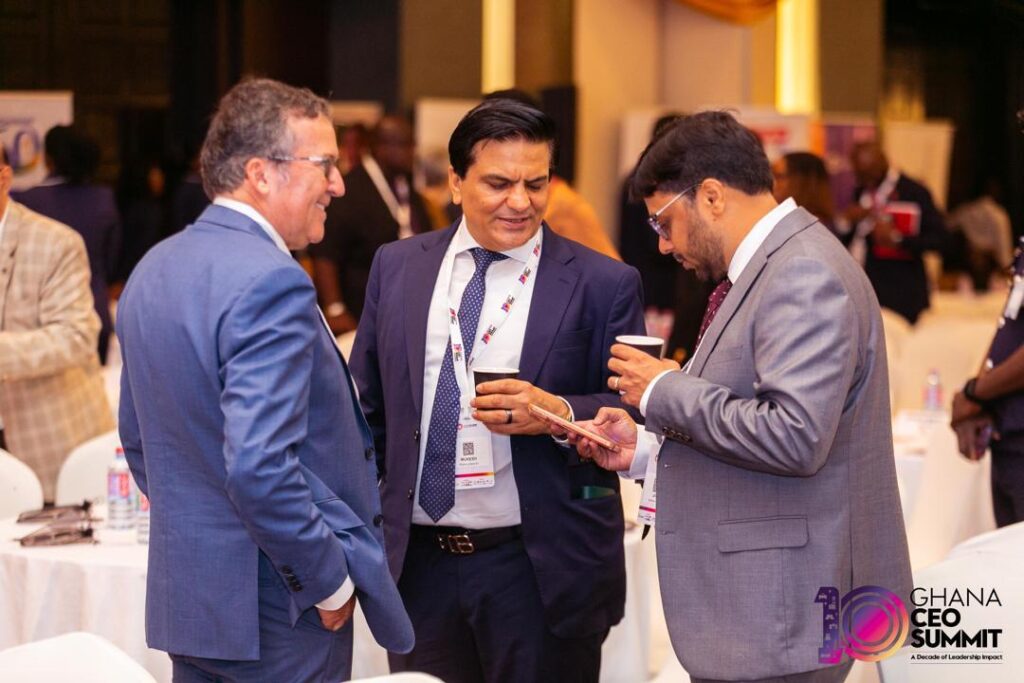


July 22, 2026
AI-Enhanced
Daily Insight for CEOs: Ecosystem leadership in a connected economy
Money
Opportunity
Growth
Key Points
- CEOs must operate within and understand interconnected business ecosystems, including customers, suppliers, partners, and regulators.
- Value creation increasingly occurs across these interconnected networks, requiring CEOs to think beyond traditional organizational boundaries.
- Ecosystem leadership demands influence, collaboration, and a broader strategic perspective to navigate complex relationships.
- Key strategies include mapping stakeholders, strengthening strategic relationships, identifying collective value creation opportunities, fostering trust, and monitoring ecosystem dynamics.
- Strong ecosystem leadership is crucial for building organizational resilience, expanding influence, and achieving sustainable growth.
Why This Matters
This article is highly relevant to Ghana as its author, Ernest De-Graft Egyir, is a key figure in the Ghanaian business community, convening the Ghana CEO Summit and serving on the Economic Dialogue Planning Committee. The principles of ecosystem leadership he advocates can significantly enhance the resilience, competitiveness, and sustainable growth of Ghanaian businesses, directly contributing to the nation's overall economic development and stability.
Read Full Article
View original sourceRelated Articles
September 4, 2026
Former SSNIT board chair demands CHRAJ findings on “hotels scandal”
- Former SSNIT Board Chairperson, Elizabeth Ohene, has publicly demanded that the Commission on Human Rights and Administrative Justice (CHRAJ) release its findings on the controversial SSNIT hotels divestment petition.
- The petition, filed over two years ago by MP Samuel Okudzeto Ablakwa, alleged "stinking corruption" in the proposed sale of a 60% interest in SSNIT-owned hotels.
- Ohene's open letter to Chief Justice Paul Baffoe-Bonnie criticizes his recent video remarks which she interprets as discrediting her past administration at SSNIT and praising the current one without full context.
- She highlights the severe reputational damage she and others suffered due to the corruption allegations and the prolonged absence of CHRAJ's investigative findings.
- Ohene also questioned the Chief Justice's perceived politicization of his office and urged him to ensure justice by pressing for the public disclosure of the CHRAJ report.
September 4, 2026
Education hub status has not translated into enough opportunities for Cape Coast residents – Expert
- Cape Coast, despite its status as an education hub, has not translated its academic strengths into sufficient economic opportunities for residents.
- A key challenge is the disconnect between knowledge production in universities and its practical application and investment in the local economy.
- Prof Ampah-Mensah urged successful indigenes to invest back into Cape Coast and called for stronger links between academic research and policymaking.
- He advocated for a fundamental shift in education towards skills development, practical application, and cultivating the right attitudes (head, hand, heart) over mere knowledge acquisition.
- He also stressed the importance of local residents taking advantage of available educational opportunities and called for community sensitization to improve school attendance.
September 5, 2026
CUTS Warns Against Cartel Conduct As Cement Producers Agree On Uniform GH¢12 Surcharge
- CUTS International has raised competition concerns over the Chamber of Cement Manufacturers, Ghana (COCMAG)'s uniform GH¢12-per-bag clinker demurrage surcharge, labeling it as potential cartel conduct.
- COCMAG justified the surcharge due to severe congestion at Tema Port, leading to vessel waiting times of 30-40 days and estimated industry-wide demurrage costs of US$45-50 million in the first eight months of 2026.
- CUTS argues that while manufacturers have a right to recover costs, competing firms with differing cost structures should independently determine their prices or surcharges, not collectively agree on a uniform amount.
- The think tank cited the airline industry's independent fuel surcharges as a comparative example, emphasizing that a common industry problem does not necessitate a common industry price.
- CUTS called for urgent government intervention to address port operational constraints and stressed the critical need for Ghana to pass its Competition and Fair-Trade Practices legislation and establish an effective national competition authority.